7.7 Did Jesus Really Rise from the Dead?
The resurrection is so central to the Christian faith that the apostle Paul writes: if Christ has not been raised, our faith is vain (1 Corinthians 15:17). In other words, the whole Christian faith rests on whether this event is historically real or not.
To evaluate its credibility from a historical point of view, we will consider three approaches. The first is the “minimal facts” approach proposed by Gary Habermas and Michael Licona, which focuses on the elements most widely recognized by scholars, including skeptical scholars1. The second is the observation of the radical transformation of the disciples before and after the resurrection of Jesus. Finally, the third approach is N. T. Wright’s analysis, which highlights the unexpected emergence of a belief in an individual, bodily, and immediate resurrection within first-century Judaism, as well as the social and theological changes that followed from it23.
After presenting these three approaches, we will also examine several alternative hypotheses proposed to explain the same facts without concluding that a bodily resurrection occurred: the theft of the body, late legend, hallucinations, and post-bereavement visions. The goal is not to force a conclusion, but to compare the different possible explanations and see which one best accounts for all the data.
Approach 1: The “Minimal Facts” Approach #
The “minimal facts” approach is a method developed by Gary Habermas and Michael Licona to defend the resurrection of Jesus. It focuses only on historical facts that meet two criteria:
- They are strongly established by the available historical data.
- They are widely accepted by the majority of New Testament scholars, including skeptical or non-Christian scholars.
The minimal facts:
- Jesus’ death by crucifixion
The crucifixion of Jesus is attested by the Gospels, Paul’s letters, and extra-biblical sources such as Tacitus (Annals XV, 44) and Flavius Josephus (Antiquities of the Jews XVIII, 63–64). This event is almost unanimously recognized by historians1.
Moreover, he truly died on the cross, as shown in chapter 7.6.
The disciples’ experiences claiming to have seen the risen Jesus
The disciples were convinced that they had encountered Jesus alive after his death. These experiences deeply transformed them, moving them from fear to public proclamation, even to the point of martyrdom.
The tradition in 1 Corinthians 15:3–7, quoted by Paul around AD 55, predates the letter itself and probably goes back to only a few years after the crucifixion. It contains a structured catechetical summary of the primitive faith, which makes a late invention highly unlikely14.1 Corinthians 15:3–7 (WEB): “For I delivered to you first of all that which I also received: that Christ died for our sins according to the Scriptures, that he was buried, that he was raised on the third day according to the Scriptures, and that he appeared to Cephas, then to the twelve. Then he appeared to over five hundred brothers at once, most of whom remain until now, but some have also fallen asleep. Then he appeared to James, then to all the apostles.”

The conversion of Paul
Paul, a persecutor of the Christian movement, became one of its main missionaries. He attributed this radical change to an appearance of the risen Christ (Acts 9, 22, 26; Galatians 1:11–16)4.The conversion of James, the brother of Jesus
James, presented in the Gospels as skeptical (John 7:5: “For even his brothers didn’t believe in him.”), later became a leader of the Jerusalem church and is recognized as a martyr by Flavius Josephus (Jewish Antiquities XX, 200)5.The empty tomb (optional)
This fact is not accepted unanimously by all historians, but it remains widely supported. It rests on the discovery reported by women — an embarrassing detail in a culture where their testimony was not highly valued — and on the absence of veneration of a known tomb of Jesus in Jerusalem3. See below.
Was the tomb empty? #
✅ Arguments in favor:
The empty tomb narratives appear in all four Gospels (Mark 16; Matthew 28; Luke 24; John 20). They report that women discovered it. In first-century Jewish culture, the testimony of women carried little legal weight. This embarrassing detail, if the story were invented, is a strong indication of authenticity2.
Another argument comes from the earliest polemic reported in Matthew’s Gospel (28:15): the Jewish authorities claimed that the disciples had stolen the body. Even if this accusation can be seen as an attempt to discredit the movement, it still presupposes that the tomb was empty1. In other words, the opponents of early Christianity did not deny that the tomb was empty.
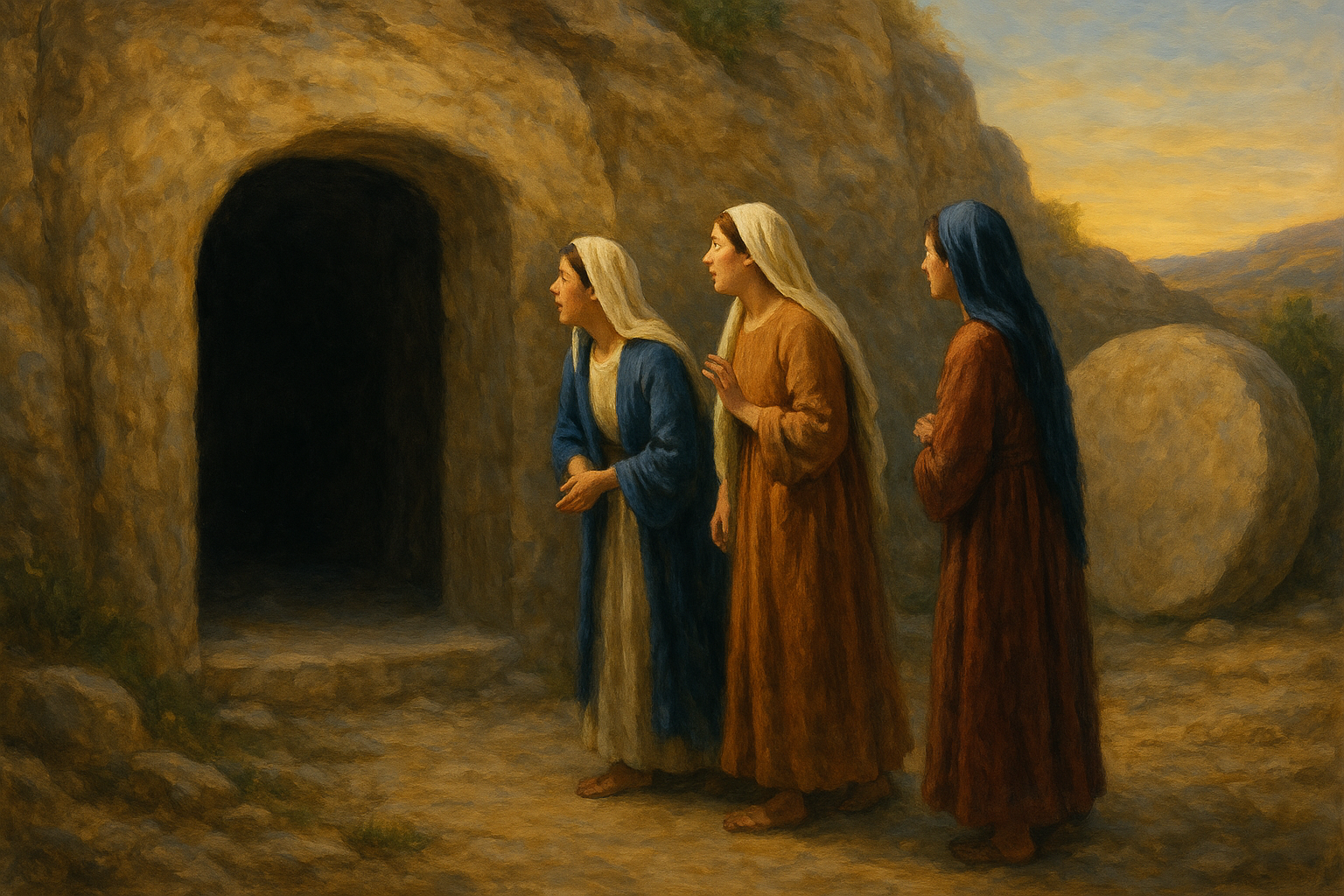
Matthew 28:11–15 (WEB):
“Now while they were going, behold, some of the guard came into the city and told the chief priests all the things that had happened. When they were assembled with the elders and had taken counsel, they gave a large amount of silver to the soldiers, saying, ‘Say that his disciples came by night and stole him away while we slept. If this comes to the governor’s ears, we will persuade him and make you free of worry.’ So they took the money and did as they were told. This saying was spread abroad among the Jews, and continues until today.”
- Many historians, whether believers or not, recognize that the empty tomb narrative has a certain historical plausibility. Gary Habermas, a specialist on the resurrection, notes that more than 75% of scholars accept it as a probable fact1.
❌ Skeptical arguments:
- Some critics, such as Bart D. Ehrman (How Jesus Became God, 2014), point out that no contemporary non-Christian source explicitly mentions the empty tomb4.
Approach 2: The Transformation of the Disciples #
One of the strongest arguments in favor of the resurrection is the radical transformation of the disciples:
- Before the resurrection, they appear discouraged, fearful, and ready to return to their former lives.
- After the appearances of the risen Christ, they become bold witnesses, proclaiming his message even to the point of death.
1. Before the resurrection: fear and discouragement #
John 20:19 (WEB): “When therefore it was evening, on that day, the first day of the week, and when the doors were shut where the disciples were assembled, for fear of the Jews, Jesus came and stood in the middle, and said to them, ‘Peace be to you.’”
-> This verse takes place on Easter Sunday evening, after the crucifixion but before most of the disciples had seen the risen Jesus. They are locked inside and terrified, fearing arrest by the Jewish authorities. This shows their fear and lack of missionary courage.Luke 24:21 (WEB): “But we were hoping that it was he who would redeem Israel. Yes, and besides all this, it is now the third day since these things happened.”
-> These words are spoken by the disciples on the road to Emmaus on the day of the resurrection. They reveal their disillusionment: they had hoped for a Messiah who would deliver Israel, but the crucifixion seemed to them like a failure. Even though they had heard about the empty tomb, they did not yet believe.
👉 These passages reveal the despair of the disciples after the crucifixion.
2. After the resurrection: the boldness of the witnesses #
Acts 2:32 (WEB): “This Jesus God raised up, to which we all are witnesses.”
👉 This verse is part of Peter’s speech on the day of Pentecost, in Jerusalem, only a few weeks after the crucifixion. The man who had denied Jesus out of fear now publicly proclaims the resurrection before hostile crowds. This is evidence of the radical transformation of the disciples.Acts 4:20 (WEB): “For we can’t help telling the things which we saw and heard.”
👉 Peter and John, arrested and then released by the Sanhedrin, refuse to remain silent despite threats. Their boldness contrasts with their attitude of flight and fear before Easter: they now say that it is impossible for them to remain silent about their experience of the risen Christ.Acts 5:29–32 (WEB): “But Peter and the apostles answered, ‘We must obey God rather than men. The God of our fathers raised up Jesus, whom you killed, hanging him on a tree. God exalted him with his right hand to be a Prince and a Savior, to give repentance to Israel, and remission of sins. We are his witnesses of these things; and so also is the Holy Spirit, whom God has given to those who obey him.’”
👉 Summoned again before the Sanhedrin, the apostles openly defy the religious authorities by affirming their duty to obey God rather than men. Their testimony explicitly concerns the resurrection, even at the risk of death.
👉 The disciples proclaim with confidence something they claim to have experienced, despite threats.
3. Faithfulness unto martyrdom #
Christian tradition reports that almost all the apostles were martyred for their faith, without ever renouncing the resurrection:
- Matthew: Eusebius, citing Hegesippus (HE III.24), places him in Ethiopia; traditions differ about his death: killed by spear or by sword.
- Mark: founder of the Church of Alexandria according to Eusebius (HE II.16); Coptic tradition (4th century) reports that he was dragged by horses until he died.
- Luke: companion of Paul (Col 4:14); the majority tradition says he died peacefully in Greece, but other isolated traditions claim he suffered martyrdom (Pseudo-Dorotheus, De vita et morte Prophetarum).
- John: exiled to Patmos (Revelation 1:9); Irenaeus (Against Heresies II.22) and Eusebius (HE III.23) report that he died of old age in Ephesus; Tertullian (De praescriptione haereticorum 36) mentions an attempted execution in boiling oil, which he survived.
- James, son of Zebedee: executed by the sword on the order of Herod Agrippa I (Acts 12:1–2).
- James, brother of Jesus: stoned in Jerusalem (Flavius Josephus, Antiquities 20.9.1); Eusebius also reports that he was thrown from the top of the Temple before being finished off (Ecclesiastical History II.23).
- Peter: crucified in Rome under Nero, according to Origen quoted by Eusebius (Ecclesiastical History III.1); tradition adds that he asked to be crucified upside down.
- Paul: beheaded in Rome under Nero, according to Eusebius (Ecclesiastical History II.25).
- Andrew: according to tradition, crucified in Patras, Greece, on an X-shaped cross (Acts of Andrew, 2nd century; Eusebius, HE III.1).
- Thomas: according to Syriac tradition, he preached in India and was pierced with spears (Acts of Thomas, 3rd century).
- Philip: executed in Hierapolis (Phrygia), either crucified or stoned (Acts of Philip, 4th century).
- Bartholomew (Nathanael): Eusebius (HE V.10) says he preached in India; traditions differ: flayed alive and then beheaded in Armenia, crucified in Arabia, or martyred in India.
- Simon the Zealot: according to various traditions, crucified in Persia (Pseudo-Hippolytus) or martyred in Syria.
- Jude (Thaddaeus): according to tradition, killed in Persia with clubs or an axe (Acts of Thaddaeus).
- Matthias (replacement for Judas): Eusebius (HE I.12) mentions his election; traditions differ: stoned and then beheaded in Jerusalem (Pseudo-Hippolytus), or missionary in Ethiopia.
👉 Their faithfulness unto death testifies to their deep conviction: they had truly seen the risen Jesus.
Note: however, we must distinguish between biblical sources and later traditions:
- The Bible directly reports the death of James, son of Zebedee (Acts 12:1–2).
- Flavius Josephus, a first-century Jewish historian, mentions the death of James, the brother of Jesus.
- For the other apostles, we depend mainly on later Christian writings: Eusebius of Caesarea in the 4th century, local traditions, and apocryphal Acts.
👉 This means that although the precise details vary from one tradition to another, one fact remains constant: the first witnesses maintained their proclamation of the resurrection at the cost of their lives, with no ancient evidence of retraction.
Conclusion #
The passage from fear to courageous proclamation, and the willingness of most apostles to accept martyrdom, constitutes a strong argument in favor of the resurrection.
It is difficult to imagine such a transformation taking place without a real and overwhelming event: the encounter with the living Christ.
Approach 3: Wright’s Argument #
The historian and theologian N. T. Wright, in his monumental work The Resurrection of the Son of God (2003), proposes a major historical argument: the resurrection of Jesus is the only explanation that accounts for the early and radical emergence of the Christian faith. Indeed:
In first-century Judaism, belief in resurrection already existed, but:
- it concerned the collective resurrection of all the righteous at the end of time,
- and it meant a bodily return to life, not merely the survival of the soul.
Jews would never have invented the idea of an individual resurrection, in the middle of history, for one single man.
- If they had seen a vision of Jesus after his death, they would have said:
- either that he was a ghost,
- or that he had been taken up to God, like Enoch or Elijah,
- but not that he had already been bodily raised.
- If they had seen a vision of Jesus after his death, they would have said:
Yet this is precisely what the first Christians proclaimed:
- Jesus was bodily raised,
- on the third day,
- and this marked the beginning of the new creation.
This proclamation was accompanied by a radical transformation of Jewish practices and beliefs:
- the shift from Sabbath to Sunday,
- the reinterpretation of the Scriptures in light of Easter,
- the birth of new rites such as baptism and the Eucharist,
- worship centered on a person — Jesus — which was unprecedented within strict Jewish monotheism.
For Wright, the only historical explanation capable of accounting at the same time for:
- the empty tomb,
- the varied appearances,
- and the sudden emergence of this theology and these practices,
is that something really happened: Jesus came out of the tomb in an unprecedented way.
In summary, Wright argues that the bodily resurrection of Jesus is the only historical explanation that accounts for the sudden and unprecedented emergence of the Christian faith.
Alternative Conclusions to Explain the Facts Above #
Even if several facts seem historically solid — Jesus’ death by crucifixion, the disciples’ conviction that they had seen Jesus alive, the conversion of Paul, the conversion of James, and possibly the empty tomb — it remains possible to propose explanations other than the resurrection.
To these facts, however, another difficult element must be added: the radical transformation of the disciples. After the crucifixion, they appear discouraged, fearful, and disoriented. Yet only a few weeks later, they publicly proclaim that Jesus has risen, despite threats, persecution, and, according to several traditions, even martyrdom.
N. T. Wright’s analysis adds another difficulty for alternative hypotheses: in first-century Judaism, people expected mainly a collective resurrection at the end of time, not the bodily resurrection of one man in the middle of history. Yet this unexpected belief appears very early at the heart of primitive Christianity, accompanied by significant theological and communal changes.
The question therefore becomes: which hypothesis best explains all of these data without leaving out an important part of the evidence?
Some scholars, such as Bart D. Ehrman, recognize the antiquity of the tradition reported in 1 Corinthians 15 and the sincerity of the disciples’ experiences. However, they consider that this is not enough to establish a bodily, public, and verifiable resurrection4.
We will therefore examine several alternative hypotheses6: the theft of the body, late legend, hallucinations, and post-bereavement visions. Each attempts to explain part of the facts, but the question is whether any of them can account for the entire historical dossier.
Alternative 1: The Theft of the Body #
The hypothesis of the theft of the body claims that Jesus did not rise from the dead, but that his body was removed from the tomb by his disciples or by another group. The tomb would therefore indeed have been found empty, not because Jesus had returned to life, but because his body had been moved.
This explanation already appears in the Gospel of Matthew, where the religious authorities accuse the disciples of stealing the body while the guards were sleeping:
Matthew 28:13 (WEB): “Say that his disciples came by night and stole him away while we slept.”
This hypothesis therefore seeks to explain the empty tomb while rejecting the idea of a real resurrection.
It may also seem plausible because the disciples had an obvious interest in preserving the honor of their master. After the crucifixion, Jesus appeared publicly as a condemned and defeated man. Removing his body and then announcing that he was alive could have been a way to save his message and prevent the complete collapse of the movement.
Moreover, the very existence of this accusation in Matthew’s Gospel shows that this explanation circulated very early. The opponents of primitive Christianity do not seem to have simply answered, “The body is still there,” but rather, “The body was stolen.” This may suggest that the empty tomb was already part of the debate.
Second, this theory may explain the empty tomb, but it does not explain the reported appearances. Even if the body had been stolen, that would not be enough to explain why several people claimed to have seen Jesus alive after his death, in different contexts.
It explains the conversion of Paul even less. Paul was not a disciple trying to preserve Jesus’ memory. On the contrary, he was a persecutor of the Christian movement. The theft of the body therefore does not explain why he would suddenly change sides and claim to have encountered the risen Christ.
The same problem arises with James, the brother of Jesus. The Gospels present him as skeptical during Jesus’ ministry. Yet he later became one of the leaders of the Jerusalem church. If the resurrection was based on a fraud organized by the disciples, it remains difficult to explain why James would have been convinced.
Another major problem is motive. The disciples had little to gain by inventing such a story. Their proclamation brought them hostility, threats, persecution, and, according to several traditions, death. One can imagine someone dying for a false belief that they sincerely think is true; but it is much harder to explain why several people would accept suffering and death for a story they themselves knew to be invented.
Finally, this hypothesis requires the lasting silence of all the accomplices. If the disciples had really stolen the body, it would have been enough for just one of them to reveal the fraud for the movement to collapse. Yet no ancient tradition reports such a confession.
Conclusion
The theft-of-the-body hypothesis explains part of the dossier: it can account for the empty tomb in a natural way. This is probably why it appears very early in the polemic against the first Christians.
However, it explains the rest of the facts poorly. It does not account for the reported appearances, the conversion of Paul, the conversion of James, or the lasting transformation of the disciples. It also assumes a collective conspiracy, an uncertain motive, and prolonged silence despite persecution.
It therefore appears to be a partial explanation: it may explain the absence of the body, but it is not enough to explain the birth of faith in the resurrection.
To illustrate this, I recommend the humorous video by “The Babylon Bee”: “If Jesus’ Resurrection Were A Hoax.”
Watch the video:
https://www.youtube.com/watch?v=23UNLLbOS3w
Note: the video is in English, but French subtitles can be added in the video settings at the bottom right.

Alternative 2: The Late Legend Hypothesis #
In this framework, the earliest generations of disciples would simply have claimed that Jesus was “alive” in a spiritual sense, or exalted with God. Only later would this conviction have been expressed in the form of concrete narratives of appearances and bodily resurrection.
The Gospels were written several decades after the events, roughly between AD 70 and 100. This delay may seem long enough to allow divergent traditions, theological interpretations, and narrative additions to appear.
Moreover, the Gospel narratives contain certain differences in detail: the locations of the appearances, the order of events, and the witnesses present. Matthew places the appearances in Galilee, Luke places them in Jerusalem, and John combines both. These variations are sometimes interpreted as the sign of a plural oral tradition4, which developed and became structured over time.
Finally, the Gospel of Mark, often considered the earliest Gospel, ends in its shorter version (Mark 16:8) without any appearance narrative of the risen Christ. Some see this as an indication.
Mark, generally dated around AD 70, ends abruptly in Mark 16:8 with frightened women and no appearance narrative of the risen Christ:
Mark 16:8 (WEB): “They went out and fled from the tomb, for trembling and astonishment had come on them. They said nothing to anyone; for they were afraid.”
Since the longer endings of Mark are later, this could suggest that the traditions related to the tomb and the appearances developed gradually4.
This formula has a fixed structure, close to a catechetical summary, which suggests that it was already stabilized very early in the first Christian communities. It includes not only the death and burial of Jesus, but also his resurrection “on the third day” and a list of specific witnesses, including individuals and groups.
Another problem is the speed with which faith in the resurrection seems to have taken hold. It is generally difficult for a legend to develop fully while direct witnesses or contemporaries are still alive and able to contest the facts. Yet the earliest Christian proclamations appear within a relatively short time after the events.
Moreover, this hypothesis must explain why the resurrection is presented from the beginning as a bodily and concrete event. As N. T. Wright emphasizes2, first-century Judaism did not expect an individual resurrection in the middle of history. If the resurrection had been a gradual construction, one might expect more symbolic or spiritual forms in its earliest stages.
Finally, even if some variations exist in the narratives, they mostly concern secondary details. The heart of the message — the death of Jesus, his burial, the proclamation of his resurrection, and the appearances — remains remarkably stable across the different sources.
Conclusion
The late legend hypothesis offers an explanation that fits known mechanisms of religious tradition formation. It helps explain how a story can evolve and become enriched over time.
However, it faces important limits when confronted with the antiquity of the testimonies, the already fixed structure of the earliest traditions, and the speed with which faith in the resurrection emerged. It struggles to account for the fact that this belief appears very early, in an already developed form.
It therefore also appears to be a partial explanation: it sheds light on some aspects of the phenomenon without accounting for it completely.
Alternative 3: Individual or Collective Hallucinations #
From this perspective, the reported appearances were not objective encounters, but subjective experiences lived as real and then interpreted as proof of the resurrection.
This hypothesis seems plausible because hallucinations are known psychological phenomena. A person can perceive an image, a voice, or a presence without any real external stimulus, while experiencing the perception as authentic.
Hallucinations can occur in contexts of extreme stress, fatigue, emotional shock, sleep deprivation, or trauma. After the crucifixion, the disciples were probably in a state of deep disorientation, marked by fear, guilt, and the collapse of their messianic expectations.
This hypothesis also explains the sincerity of the disciples without assuming that they lied. They could have been convinced that they had seen Jesus alive, not because they invented the story, but because they had undergone an extremely powerful subjective experience.
It can also account for the origin of an initial proclamation: a first individual experience, perhaps that of Peter or Mary Magdalene, could have been told to the other disciples and triggered a dynamic of expectation, emotion, and confirmation within the group.
Modern psychology emphasizes that hallucinations are generally individual. They depend on a person’s mental state and are not shared simultaneously in an identical way by several individuals. Yet the ancient accounts also mention appearances to groups, which is difficult to explain within this framework. True collective hallucinations, in which several people perceive exactly the same thing, are extremely rare.
The descriptions of the appearances are varied and extend over a certain period of time. This is not a single isolated event, but multiple experiences in different contexts. This diversity complicates the idea of a single psychological phenomenon.
What stands out is the diversity of the witnesses. Some were close to Jesus (Peter, the Twelve), others were entire groups (more than 500 people), and still others were initially hostile or skeptical (James and Paul). Paul was not expecting a vision; on the contrary, he was persecuting Christians. The conversion of these figures is a particularly strong argument, because it cannot be explained by a simple desire to believe12.
In first-century Judaism, the expectation was not an individual resurrection in the middle of history, but a collective resurrection at the end of time. The disciples therefore had no obvious psychological reason to project such an idea.
Another problem concerns the concrete dimension of the narratives. The New Testament describes interactions, conversations, and even meals shared with Jesus. These elements go beyond what is usually observed in hallucinations, which are generally shorter and less structured.
Furthermore, this hypothesis does not explain the empty tomb. Even if the disciples had hallucinations, that would not explain why Jesus’ body was not found.
Finally, the lasting transformation of the disciples must still be explained. Their shift from fear to public proclamation, despite the risks, is something the hallucination hypothesis struggles to illuminate fully.
Conclusion:
The hallucination hypothesis offers a natural and psychologically plausible explanation for some of the experiences reported by the disciples. It helps explain how sincere convictions could have emerged from powerful subjective experiences.
However, it has significant limits when it comes to explaining the whole set of elements, especially the collective dimension of the appearances, their diversity, their concrete character, and their historical impact. It therefore appears to be a partial explanation: it sheds light on certain aspects of the phenomenon without accounting for it completely.
Alternative 4: The Vision Hypothesis #
Some scholars prefer to understand the appearance narratives as visionary or religious experiences, without necessarily concluding that a bodily resurrection occurred.
From this perspective, the disciples of Jesus Christ saw appearances of Jesus or felt his presence after his death, without Jesus having physically returned to life. These experiences could include visual encounters, exchanges, or a clear impression of presence, experienced as authentic.
This type of experience is comparable to those reported by some people after the loss of a loved one. They say they saw the person, spoke with them, or interacted with them, sometimes even without knowing that the person had died at the time of the experience.
Many contemporary testimonies report this type of experience after bereavement. They are often described as vivid, striking, and difficult to distinguish from an ordinary encounter. They can bring comfort and give the impression that the bond with the deceased person has not been completely broken.
After the crucifixion, the disciples were in an intense emotional state, marked by attachment to Jesus, loss, and confusion. In such a context, it is plausible that several of them experienced something of this kind, in which Jesus appeared to them as alive in a new way.
This hypothesis therefore allows us to take the sincerity of the disciples seriously, without assuming either deception or a physical return to life.
This type of experience is generally individual. It remains difficult to explain how several people could have seen or experienced similar appearances collectively or in a coordinated way.
The ancient narratives speak of a diversity of appearances, in different places and at different times, sometimes before groups. This multiplicity makes the explanation more complex, because it requires a repetition and a certain coherence of these experiences.
Moreover, the New Testament narratives describe concrete interactions, such as prolonged conversations or meals. These elements go beyond what is usually reported in this type of experience, which is often briefer and more limited.
The descriptions emphasize a character that is both recognizable and transformed: Jesus speaks, walks, shares meals, but also appears suddenly. This mixture corresponds neither to a simple spiritual presence nor to a purely inner experience.
Furthermore, this hypothesis does not directly explain the empty tomb, which means that another explanation must be added.
Finally, it remains to be understood how these experiences could have led to such a deep and lasting transformation of the disciples, leading them to proclaim their message publicly despite the risks.
Conclusion
The post-bereavement vision hypothesis proposes that the disciples really experienced encounters with Jesus after his death, without this implying a physical return to life. It offers a natural explanation that takes seriously the intensity and sincerity of these experiences.
However, it remains partial. While it helps illuminate some aspects of the testimonies, it struggles to account for the whole set of elements, especially their collective dimension, their richness, and their historical impact. Moreover, this hypothesis does not directly explain the empty tomb, which means that another explanation must be added.
7.7.4 Conclusion #
The historian can establish with a high degree of certainty that Jesus was crucified and died, and that his disciples sincerely believed they had seen him alive after his death. The very early tradition of 1 Corinthians 15, the diversity of the witnesses, the plausibility of the empty tomb, and the rapid emergence of unprecedented practices and beliefs form a converging body of evidence that is difficult to ignore.
Purely natural explanations — theft of the body, hallucinations, visions, or late legend — each manage to illuminate certain aspects of the phenomenon, but they struggle to account for all the data without requiring additional hypotheses or complex combinations.
Three different approaches reinforce one another:
- The “minimal facts” approach (Habermas, Licona) shows that the facts most widely accepted by historians find their best explanation in the resurrection.
- The observation of the radical transformation of the disciples, from fear to courage, even to the point of accepting martyrdom, confirms the strength of their conviction that they had truly seen the risen Christ.
- Finally, N. T. Wright’s analysis shows that only a bodily and historical resurrection can explain the sudden and unprecedented emergence of a radically new theology and new practices within first-century Judaism.
Thus, the explanation of the bodily resurrection of Jesus remains, according to Wright, Habermas, Licona, and Strobel, the most coherent and integrative hypothesis1243.
As Lee Strobel writes, an investigative journalist who became a Christian after studying the historical evidence (The Case for Christ, 1998)7:
It is more reasonable to believe that the tomb was truly empty and that the disciples saw Jesus alive than to suppose an unlikely combination of conspiracies, hallucinations, and legends.
The historical sources report several major elements: the empty tomb discovered by women, the multiple appearances of Jesus to his disciples, the radical conversion of Paul the persecutor and James the skeptic, as well as the profound transformation of the apostles from fear to courageous testimony.
These facts were accompanied by the sudden emergence of unprecedented beliefs and practices, which are difficult to explain without a real event.
Thus, the bodily resurrection of Jesus remains the most coherent hypothesis for accounting for all the facts.
The historical sources report several major elements: the empty tomb discovered by women, the multiple appearances of Jesus to his disciples, the radical conversion of Paul the persecutor and James the skeptic, as well as the profound transformation of the apostles from fear to courageous testimony. These facts were accompanied by the sudden emergence of unprecedented beliefs and practices, which are difficult to explain without a real event. Thus, the resurrection of Jesus remains the most coherent hypothesis for accounting for all the facts.
Notes and References #
Habermas, Gary R., & Licona, Michael. The Case for the Resurrection of Jesus. Kregel, 2004. ↩︎ ↩︎ ↩︎ ↩︎ ↩︎ ↩︎ ↩︎
Wright, N. T. The Resurrection of the Son of God. Fortress Press, 2003. ↩︎ ↩︎ ↩︎ ↩︎ ↩︎
Wright, N. T. — The Resurrection of JESUS: Forgotten FACTS & IMPACT (video). https://www.youtube.com/watch?v=TbGXS3vJOXM ↩︎ ↩︎ ↩︎
Ehrman, Bart D. How Jesus Became God. HarperOne, 2014. ↩︎ ↩︎ ↩︎ ↩︎ ↩︎ ↩︎ ↩︎
Flavius Josephus, Antiquities of the Jews XX, 200. Available here: https://gutenberg.org/files/2848/2848-h/2848-h.htm#link202H_4_0001 ↩︎
Frère Paul-Adrien, Les 7 preuves de la résurrection contre l’athéisme (Même les athées ne peuvent pas répondre), https://www.youtube.com/watch?v=WiyQEqxU8VY ↩︎
Strobel, Lee. The Case for Christ. Zondervan, 1998. ↩︎