6.2 Negative Near-Death Experience
Near-death experiences (NDEs) are most often described as deeply positive: a feeling of peace, intense joy, unconditional love, or encounters with a benevolent light. Yet not all NDEs follow this pattern.
In an article published in 2023 in the Journal of Scientific Exploration1, psychiatrist Bruce Greyson, one of the leading researchers in the field of NDEs, examined a lesser-known aspect of the phenomenon: negative or distressing near-death experiences.
According to the data he analyzes, around 10 to 20% of NDEs appear to include negative or frightening elements. These experiences are probably underreported because people who undergo them often hesitate to talk about them: they may feel ashamed, traumatized, or unable to interpret what happened.
Greyson identifies several main forms of negative NDEs:
- Inverted experiences: these resemble positive NDEs, but the emotions are the opposite. The light may appear threatening, and encounters inspire fear or guilt.
- Experiences of the void: some people describe an absolute nothingness characterized by total darkness, a sense of isolation, and a loss of meaning.
- Hellish experiences: other testimonies evoke dark or hostile environments, sometimes accompanied by screams, suffering, or the presence of threatening entities.
Greyson examines several hypotheses to explain these experiences, including psychological factors (fear, resistance, personality), biological factors related to the medical situation, or the circumstances of the trauma. However, no single explanation seems able to account for all cases.
Negative NDEs can have a significant psychological impact. Some people take years to integrate their experience. In other cases, these episodes become the starting point for personal or spiritual transformation.
Greyson therefore concludes that negative NDEs represent a real but still insufficiently studied dimension of the near-death experience phenomenon, and that they deserve further research to better understand their causes and implications.
To better understand them, here are two testimonies: that of Nancy Evans Bush (the void) and that of Howard Storm (hell).
Nancy Evans Bush: the existential void #
In the 1960s, Nancy Evans Bush, a young Christian woman with no particular health problems, had a near-death experience while under anesthesia during the birth of her second child23.
Unlike the luminous accounts often associated with NDEs, her experience took a radically different turn. She found herself immersed in a vast, dark emptiness, devoid of any familiar presence. Gradually, even the most fundamental reference points seemed to disappear: no world, no relationships, no identity… and even the sense that God himself was no longer there.
She would later describe this experience as a form of absolute annihilation: not a hell of flames or demons, but a cold and silent void marked by the total absence of meaning, presence, and hope.
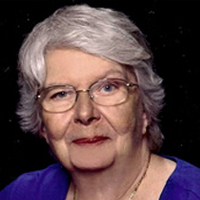
Her NDE account
It was a clear, hot night in late July. In an old Hudson River town of New York State, I was in labor with my second child. I was 28 and healthy, and the pregnancy had been easy; however, this was three weeks before the due date. Hours earlier, the obstetrician had discovered that an episode of premature labor the day before had moved the baby into the birth canal. He ordered an emergency induction. Now, ready to deliver, I was anesthetized according to common practice.
What I knew next was that I found myself awake and somehow flying over a building. A quick glimpse backward—oddly, with no sense of turning around—and I could see box-like structures on the roof of what I thought must be the hospital, because there, up the hill, was the window of the classroom where I taught.
There was the town, receding swiftly below me, and then the dark outline of hills along the river, and the earth’s curvature (“It’s true, it really is round!”), and finally the planet becoming smaller, smaller while I continued into… where? Years later, I would describe it as hurtling into space “like an astronaut without a capsule,” for the first astronaut had gone into space only a year earlier.
The speed was puzzling. It felt like drifting, but I was covering enormous distances at what felt like an angle, headed northeast. (Is there a northeast in space?). The nighttime darkness turned into immensity and a different sort of dark: it was “thinner” somehow, shading inexplicably toward what might have been a paler horizon—except that there was no horizon.
My impression was that God was over there. I was utterly alone. There was nothing but that strange, dark twilight, and the awareness of being there, and emptiness. There was a sense of form to me, I recall, or at least of presence, but no body. It was as if I were made of veiling—just insubstantial. But I was thinking. Did I have a mind, or was I being a mind? An unanswerable question.
A group of circles appeared ahead and slightly to my left, perhaps a half-dozen of them, moving toward me. Half black and half white, they clicked as they flew, snapping white-to-black, black-to-white, sending an authoritative message without words.
Somehow its meaning was clear:
“This is all there is. This is all there ever was. This is It. Anything else you remember is a joke. You are not real. You never were real. You never existed. Your life never existed. The world never existed. It was a game you were allowed to invent. There was never anything, or anyone. That’s the joke—that it was all a joke.”
The circles felt heckling but not evil, mocking, mechanistic, clicking without feeling. They seemed like messengers, certain of what they were saying, not ultimate authority themselves but with an authoritative message.
I argued passionately to prove them wrong, throwing out details of my mother’s girlhood, stories of my husband’s youth, facts from history—things I could not have experienced myself. Other people must exist; for how would I know these things if someone had not told me? And my first baby, the toddler Katy waiting at home—I knew that baby, the feel of the sturdy little body, the smell of her rosy babiness. I couldn’t have made her up! And childbirth! Why would any woman (even an imaginary woman) invent childbirth? And what about this unborn baby?
“Whatever you remember is part of the joke. Your mother, your babies—they were never real,” they mocked. “This is all there is, all there ever was. Just this.” But God? The thin darkness stretched off into nothingness, a thin not-quite-mist of dusk, and the circles kept clicking. And then I was entirely alone.
The circles had moved out of sight, and there was nothing left—the world unreal and gone, and with it my first baby, and this baby who would never be born, and all other babies. Everyone I knew and loved—(but how had I known them, if they were never real?)—gone, and hills, and robins.
There was no world, no home, no babies, not even a self to go home to. I thought that no one could bear so much grief, but there seemed no end to it and no way out. Everyone, everything, gone, even God, and I was alone forever in the swimming twilight dark.
And then I was groggily coming to in a hospital bed. My first waking thought: that I knew a terrible secret. “Calvin was right! Predestination. I have experienced predestination. I am one of the lost. That is what is out there, what it will be like when I die. There is something so wrong with my very being, even God has willed me not to be.” But why? Raised as a Congregational preacher’s daughter in a denomination that emphasized the love of God and service to others rather than hell-fire, I was a questioner but deeply reverent, had belonged to youth groups, sung in choirs, taught Sunday School, was on staff at summer church conferences, had hoped for seminary. What had I ever done, that God would consign me to such emptiness? Despair moved like a tide.
This experience haunted her for years. For more than 20 years, she told no one about it, fearing she would be perceived as crazy or isolated.
Only much later, after discovering the work of Raymond Moody and the IANDS (International Association for Near-Death Studies), did she realize she was not alone. She discovered that other people had also experienced “dark” NDEs, and she then decided to conduct her own research.
With the support of Dr. Bruce Greyson, she explored these minority accounts and became the voice of those who had never been heard: witnesses of negative NDEs.
Their profiles are often far from the clichés:
- some are moral, religious, or benevolent people;
- others are very rational, attached to control, or going through an unconscious inner crisis.
What these people seem to share is a form of inner disconnection: fear of letting go, mental rigidity, emotional emptiness.
These experiences could be understood as a form of purification or spiritual crisis:
- they confront the soul with its absence of love or meaning;
- they force the person to let go of false certainties;
- they trigger a deep inner transformation.
Hell may not be a place. It may be a stage. A violent transition that pushes us to let go.
Howard Storm: from hell to the light #
Howard Storm was a respected university professor who was convinced that consciousness was merely a product of the brain and that death marked the absolute end of existence.
The idea of any life after death had never even crossed my mind, because I did not believe in such things. I was convinced that there was nothing after death. Only naïve people believed in such things. I did not believe in God, heaven, hell, or any of those fairy tales.
.png)
But in 1985, during a trip to Paris, he suffered a severe intestinal perforation. While waiting for emergency surgery, he lost consciousness and underwent a life-changing near-death experience.45
He found himself outside his body, guided by entities through a dark corridor. These entities quickly became hostile and violent. He experienced a scene resembling hell: loneliness, humiliation, and psychological suffering.
Deep within himself, a voice urged him to pray. Several times he tried to remember childhood memories from Sunday school or prayers he had learned, or anything similar such as “God Bless America.” This had an effect. The entities withdrew.
Alone, on the edge of despair, he called out to Jesus for help:
For the first time in my adult life, I wanted it to be true that Jesus loved me. I did not know how to express what I wanted and needed, but with the last ounce of strength I had left, I cried out into the darkness: “Jesus, save me.” I shouted it from the depths of my being, with all the energy I had left. I had never wanted anything so strongly in my life.
Immediately, a gentle and loving light burst forth and pulled him out of the darkness. He was welcomed by a presence of peace and love that he identified as Jesus. This experience of love changed him completely.
No matter what happened, I would always know that God loved me.
He asked many questions and received clear answers. Jesus gave him guidance and wisdom:
You will find what you seek in people and in the world. If you are filled with love, you will find love. If you seek beauty, you will see beauty. If you pursue goodness, you will receive goodness. What you are inside attracts the same thing from the outside. When you love, love comes to you. When you hate, hate finds you.
For example, when he asked “How can I know the will of God?”, he received this answer:
God has sent many teachers into the world to deliver this message: you must love one another. God clearly demonstrated this message through the life of Jesus in the world and through countless examples of people who have experienced God’s love and shared that love with their brothers and sisters. At the center of every soul is the love of God, along with the desire to receive that love and share it with all the children of God. Realizing who you truly are, and becoming a child of God, is the only reason you were born into this world.
He realized that he had focused on the wrong things and that his life lacked love, connection, and truth. When he begged to remain in the light, God replied:
You are not ready to go to Heaven. You have not lived a life suited for Heaven. You still have much to learn in the world, and you still have work to do: take care of the people God needs you to love.
Back in life, he was radically transformed: he left the university, became a Christian, and later a pastor. He devoted his life to sharing this message: love is the purpose of existence, and even in the depths of hell, one can still call upon the light.
Other testimonies #
Dr. Eben Alexander:
Link to the video testimony (National geographic channel): https://www.youtube.com/watch?v=h_B9ymma9MU
The video recounts the near-death experience of Dr. Eben Alexander, a neurosurgeon. Unlike many NDE testimonies that immediately describe a light or a feeling of peace, his experience begins in an extremely dark and unsettling environment. He finds himself in what he describes as a boiling, muddy underground universe filled with a dark and chaotic atmosphere. He has no memory of his life on Earth, nor of speech or language. Everything seems unfamiliar to him, and he hears only a monotonous pounding coming from the depths of this environment.
Time seems to last an eternity. Then the experience suddenly changes. A harmonious light appears abruptly, like a tear in the fabric of reality. He then feels as if he is being pulled out of this dark universe and rising toward a completely different place. He finds himself in a beautiful green valley filled with colors, music, and indescribable beauty. In particular, he hears the singing of a choir and senses a deep atmosphere of peace.
In this luminous environment, he experiences unconditional love and a divine presence that seems to permeate the entire scene. This presence gives him the sense that he is there to learn something, but that he is not meant to stay. He understands that he is only passing through this place temporarily before returning to the earthly world.
Ridley Black (on Reddit):
- I had an NDE in 2015 and it was like being swallowed by a void of hopeless nothing. It felt like looking into a long, dark tunnel with no light and no end. My experience was extremely traumatizing and I haven’t been able to get past it even with therapy etc.
OxnardG (on Reddit):
It took me about a year to fully understand and learn to cope with what happened to me in my NDE (it was the feeling of powerlessness, abandonment and eventually pure pain) I feel extremely lucky to be given a “second chance” and what I have learnt is to appreciate the life I have been given, to treat my loved ones with kindness, to be content and also to be forgiving to others because mercy can produce some of the purest beauty in life as it has helped me do so with my own life.
Ever since my NDE it has been a bumpy road and I have slipped and fallen back into my old ways many times but I continue to grow and follow the light, my life and the lives of others around me have been extremely positively effected by my change :)
Conclusion #
Discovering these testimonies profoundly changed my understanding of the question of hell. At one point in my life, I was no longer really convinced of its existence. However, accounts of negative NDEs show that some people genuinely experience profound distress at the threshold of death. Certain elements of these experiences even resemble the traditional vision of hell: darkness, hostile spirits, loneliness, or a sense of abandonment.
However, these testimonies do not necessarily correspond to the classic image of an eternal punishment imposed by God. It is not clear that these experiences are linked to a life of sin as defined in some religions. Rather, they seem to reveal a particular state of consciousness, marked by fear, confusion, or a form of inner closure.
One important point is that these experiences do not seem to be necessarily definitive. Even in the darkest accounts, a change of attitude — prayer, a call for help, letting go — can transform the experience. This is precisely what happens to Howard Storm: in the heart of darkness, a simple call to the light radically changes the situation.
From this perspective, “hell” could be understood not as an irreversible condemnation, but as a transitional stage, a confrontation with oneself that can lead to inner transformation.
A similar idea also appears in certain non-Western spiritual traditions. Tibetan Buddhism, for example, offers a vision of an intermediate state in which consciousness passes through different experiences capable of provoking a profound awakening.
The Bardo Thödol6, often referred to as the Tibetan Book of the Dead, is a text intended to be recited to a person who is dying or has recently died in order to help them navigate the different phases of the intermediate state between death and rebirth. The text describes a succession of experiences—sometimes luminous and peaceful, sometimes dark or terrifying—that consciousness may encounter during this period. Several descriptions of this intermediate state show striking similarities with certain Western accounts of near-death experiences: encounters with lights, symbolic visions, or intense emotional confrontations.
The aim of the Bardo Thödol is to help the individual recognize that these visions are manifestations of their own mind, so that they neither become attached to them nor fear them. By understanding their nature, consciousness can pass through these experiences without becoming trapped by fear or illusion.
However, an important point distinguishes this perspective from the classical Western view. In Buddhism, there is no permanent soul in the sense understood by most Western traditions. Instead, the tradition speaks of the continuity of a stream of consciousness that continues after death and passes through an intermediate state before a possible rebirth.
Thus, although the descriptions of these experiences may show similarities, the philosophical interpretation differs profoundly. In the Buddhist perspective, these experiences are generally understood as manifestations of the mind itself, rather than as an external spiritual reality.
This convergence between different traditions is fascinating. Despite their philosophical differences, both describe intense experiences of inner confrontation that can occur at the threshold of death. These dark experiences may not be endings, but beginnings: moments when a person is confronted with themselves and when transformation becomes possible for those who are willing to question themselves and allow themselves to be transformed.
Even in the heart of darkness, the light seems to remain accessible.
Further reading #
Greyson, Bruce. The Darker Side of Near-Death Experiences. Journal of Scientific Exploration, vol. 37, no. 4, 2023, pp. 683–698. ↩︎
Dancing Past the Dark: Distressing Near-Death Experiences, Nancy Evans Bush, Hampton Roads Publishing, 2012 (rev. 2020) ↩︎
My Descent Into Death: A Second Chance at Life, Howard Storm, Hampton Roads Publishing, 2000 ↩︎
Bardo Thödol, Britannica encyclopaedia, https://www.britannica.com/topic/Bardo-Thodol ↩︎